CAD-first design
Modeled the full turret in Onshape, using CAD to reason about plate geometry, bearing spacing, mounting locations, and assembly constraints before cutting material.
CAD / Fabrication / Mechanisms
A custom turret designed in Onshape and carried through fabrication, assembly, and repeated testing. The build combined CAD, physics calculations, goBILDA motor tuning, CNC-machined plates, and 3D printed mounts to reach a reliable final mechanism.
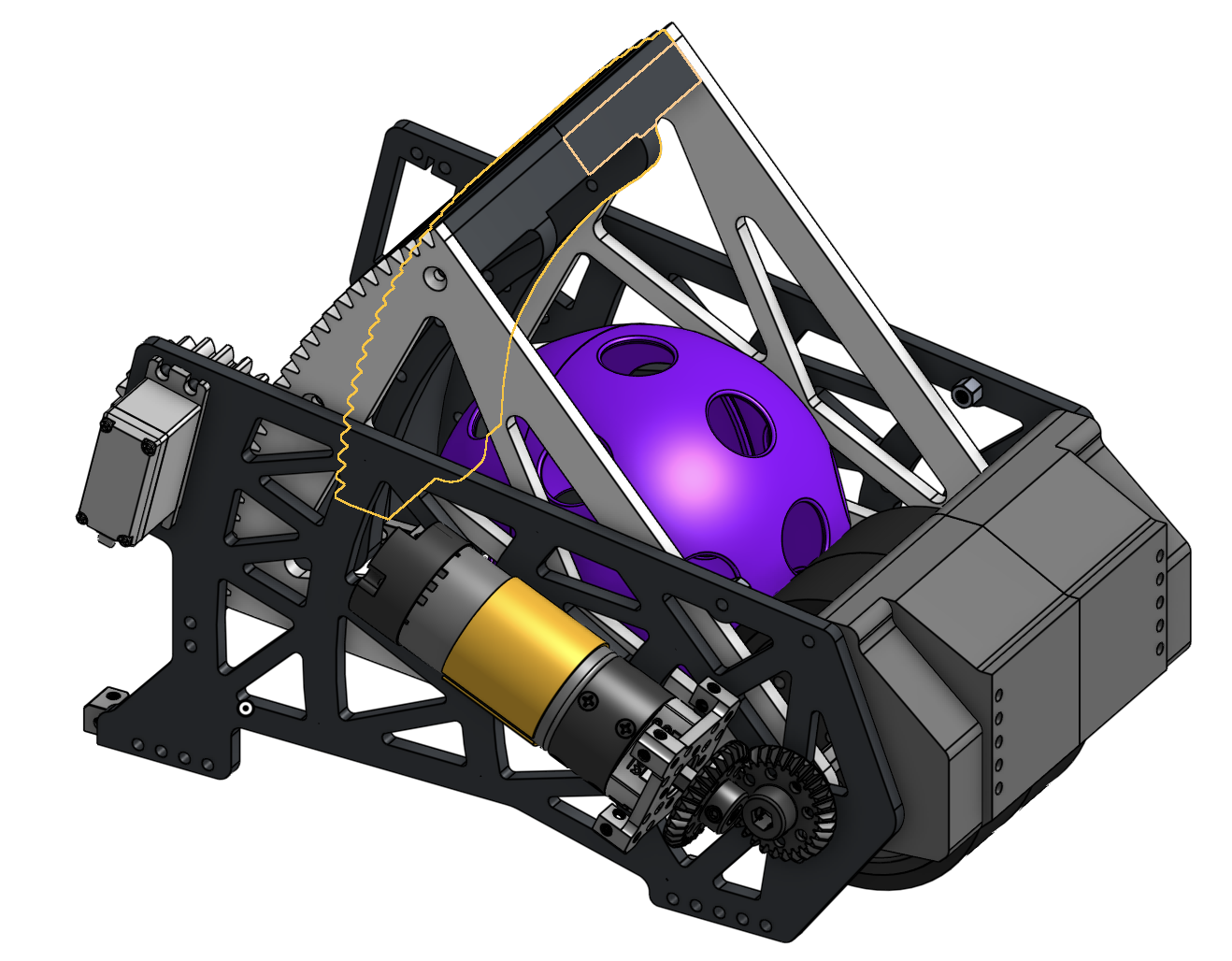
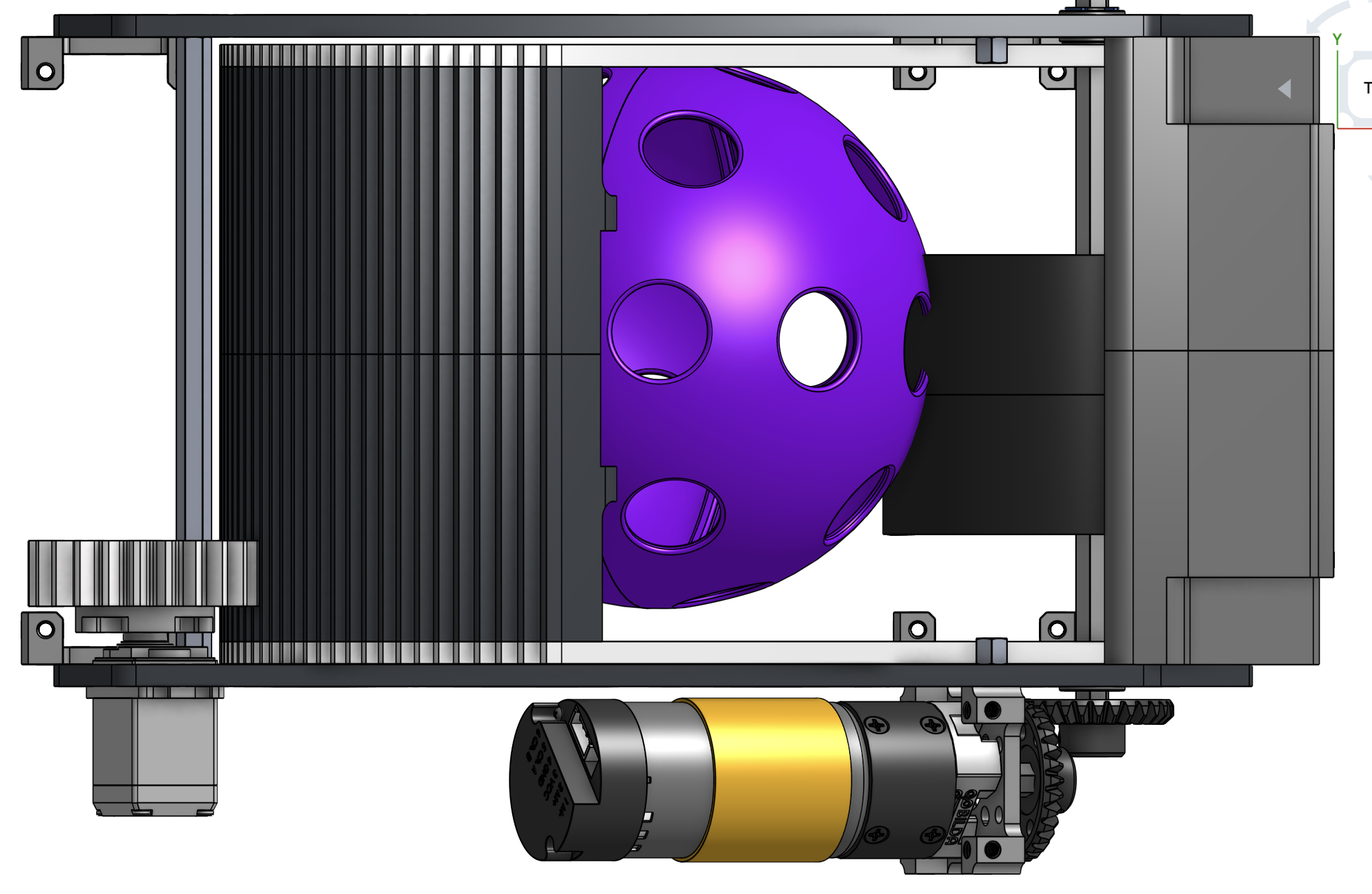
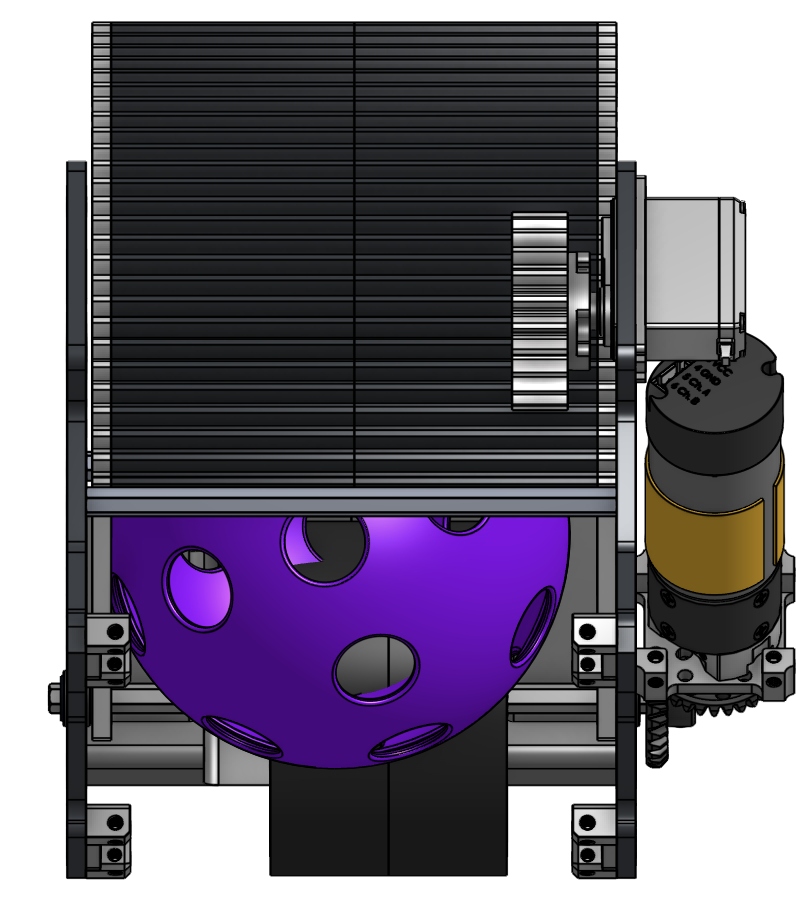
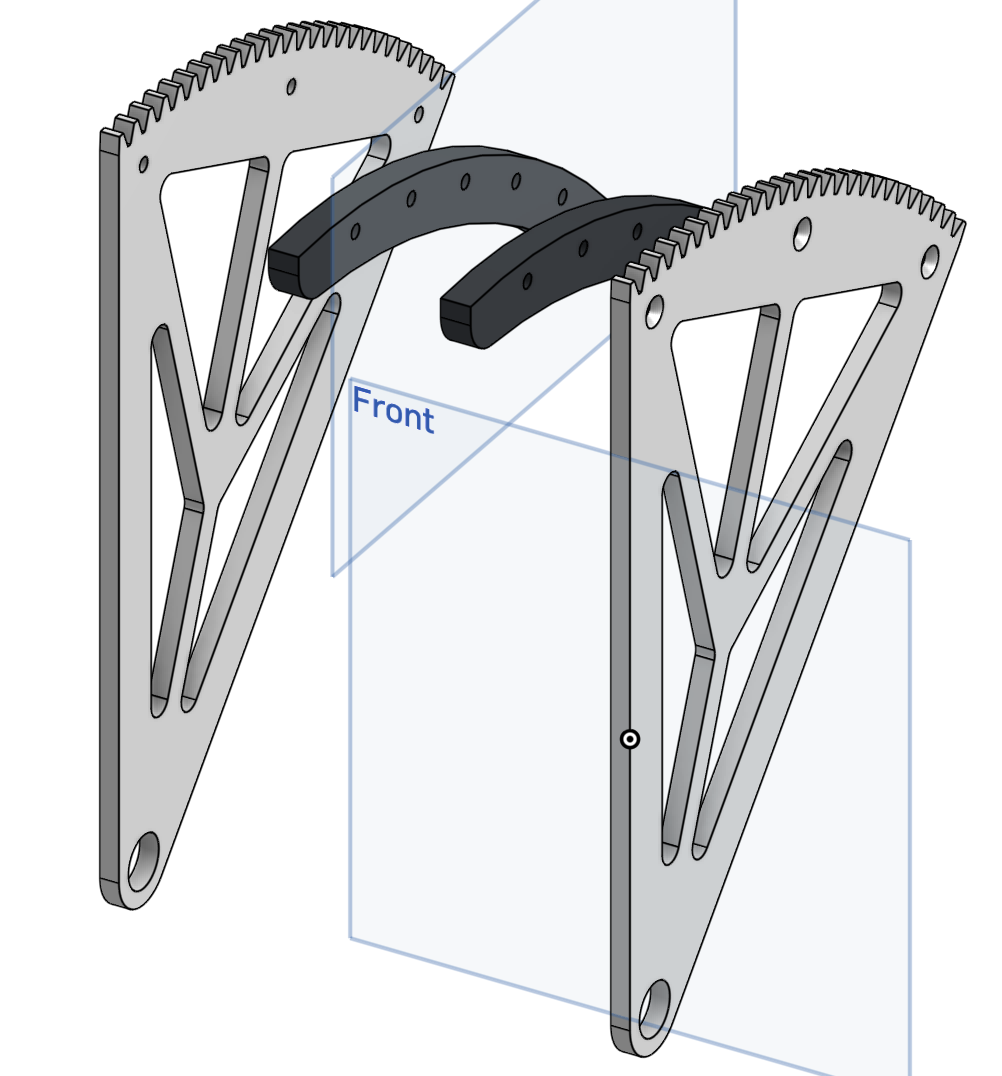
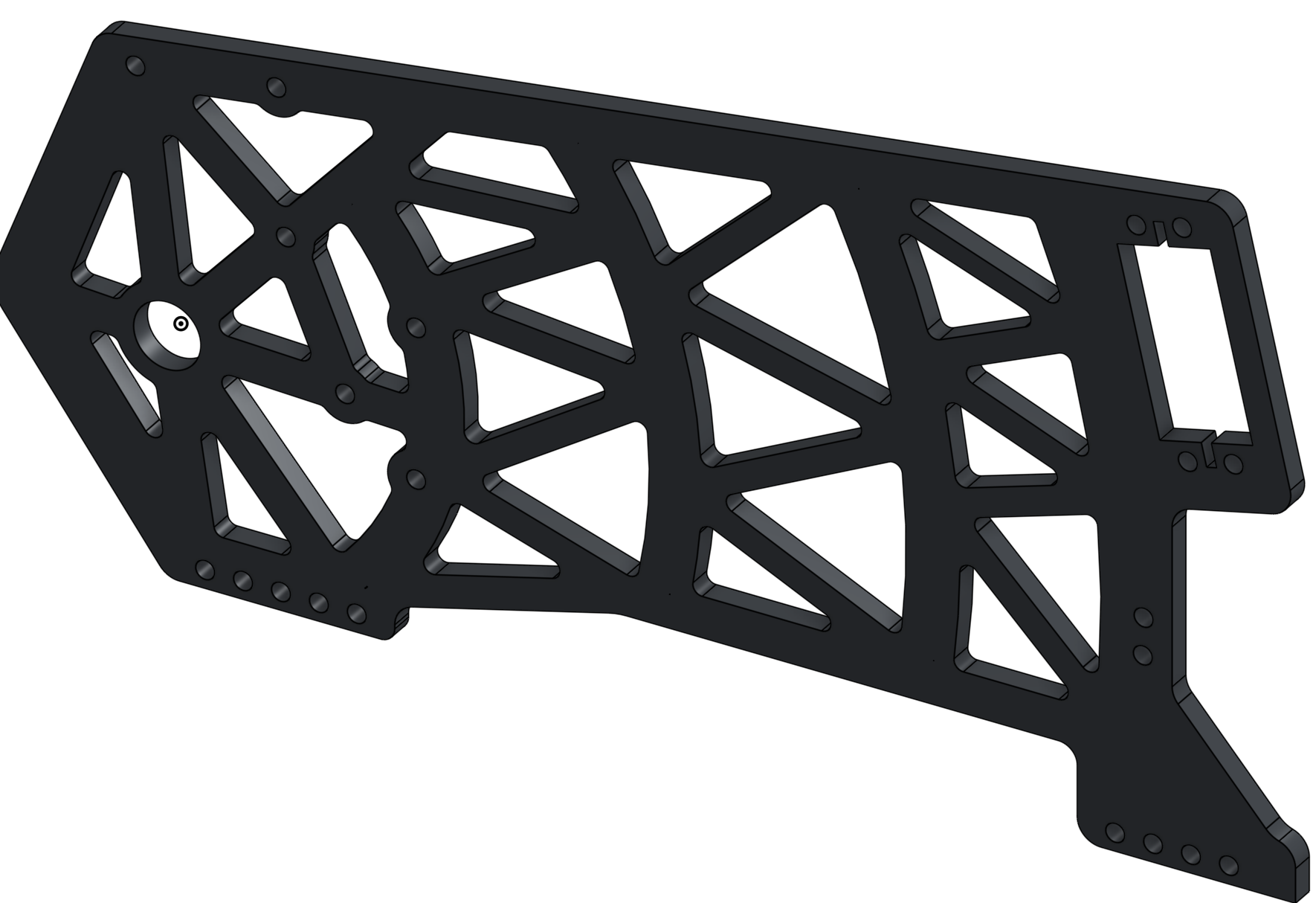
Modeled the full turret in Onshape, using CAD to reason about plate geometry, bearing spacing, mounting locations, and assembly constraints before cutting material.
Matched the goBILDA motor behavior to the flywheel material and overall mechanism response, tuning the system through repeated testing instead of assuming the first design would behave correctly.
Moved from digital design to physical build by CNC machining the main plates and 3D printing custom mounts, then iterating on fit, rigidity, and alignment after assembly.
Project Notes
The turret started as a CAD problem, not just a parts problem. I used Onshape to lay out the rotating structure, plate interfaces, and mounting geometry so the final assembly would be manufacturable and mechanically consistent before fabrication began.
To make the turret perform properly, I worked through the relationship between motor output, inertia, wheel behavior, and structural stiffness. That meant using calculations to guide the design, then validating those assumptions against real testing and adjusting the mechanism when the hardware disagreed.
The main structural plates were CNC machined for repeatability and rigidity, while custom 3D printed mounts handled geometry that was easier to iterate quickly in printed form. That split let me keep the critical structure strong while still moving quickly on the interfaces and supporting parts.
The goBILDA motor and the selected flywheel material had to be tuned together as one system. Small changes in wheel behavior, spin-up feel, and overall response affected how consistently the turret operated, so the final build came from repeated test cycles rather than a single pass design.
The Onshape model documents the assembly decisions directly, from plate layout to mount placement, and served as the reference point for fabrication and iteration throughout the build.
Videos